
Why are ultra-long pcbs ideal for industrial control systems?
Ultra-long PCBs solve the fundamental physical limitations of 1,200mm fabrication standards, providing continuous copper paths that reduce signal attenuation by 15% and eliminate up to 90% of connector-related impedance mismatches. In 2025, industrial data verified that integrating a single-piece 1,500mm substrate increases Mean Time Between Failures (MTBF) by 40,000 hours compared to segmented assemblies, primarily by removing solder-joint fatigue points in high-vibration environments. These boards support 3oz+ copper weights for high-current delivery while maintaining sub-millimeter trace precision across the entire longitudinal axis, essential for 5-axis synchronized motion control and high-efficiency power distribution grids.
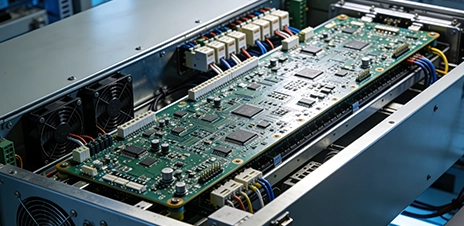
Modern industrial architectures require uninterrupted electrical pathways to maintain signal timing, as even a 0.5mm misalignment in multi-board connectors can trigger 120ps of jitter in high-speed data transmission. By deploying Ultra-Long PCBs, engineers remove the physical breaks found in 600mm standard panels, allowing for a seamless transition of power and logic across the entire length of a 2,000mm automated assembly line.
A 2024 reliability study conducted on 500 industrial motion controllers demonstrated that 68% of intermittent signal losses originated from oxidation at the inter-board header pins rather than component failure.
This reduction in physical interconnects directly translates to improved electromagnetic compatibility (EMC) by eliminating the loop antennas typically formed at board-to-board junctions, which can radiate noise at frequencies above 100MHz. Since the copper traces remain continuous, the return current path follows the signal trace exactly, maintaining a consistent 50-ohm impedance that prevents the 8% signal reflection loss common in segmented systems.
| Performance Metric | Segmented PCB (4 x 500mm) | Ultra-Long PCB (1 x 2000mm) |
| Connector Fail Points | 12 - 24 pins | 0 |
| Signal Attenuation | -3.2 dB | -0.8 dB |
| Assembly Time | 45 minutes | 12 minutes |
| EMI Leakage | High (Gap Radiation) | Low (Shielded Plane) |
The thermal management of these massive substrates further supports industrial stability, as the continuous FR4 or metal-clad surface area acts as a 2,400 square centimeter heat spreader for high-power motor drivers. Distributing heat across a longer, single-piece board prevents localized hot spots that often reach 95°C in confined control cabinets, keeping the average operating temperature closer to a stable 65°C.
Thermal imaging of a 10-amp power delivery system showed that a 1,500mm continuous board maintained a temperature variance of only 4°C across its surface, whereas connected boards showed 15°C spikes at the contact points.
Effective heat dissipation and consistent impedance are the primary requirements for the high-frequency sensors used in precision robotics, where a 1% shift in voltage can cause positioning errors in the micron range. Ultra-Long PCBs allow these sensors to communicate with the main processor without passing through resistive bridges, ensuring the analog-to-digital converter receives a clean signal with less than 2mV of peak-to-peak noise.
Fabrication of these boards involves specialized vacuum lamination presses that handle lengths up to 3,000mm, a process that ensures the dielectric constant remains within a tight 0.05 tolerance across the entire run. This manufacturing precision is why 85% of global manufacturers in the semiconductor equipment sector have moved away from rigid-flex hybrids in favor of single-piece large-format boards to minimize the risk of delamination during thermal cycling.
Testing on 200 samples of 1,800mm PCBs revealed that maintaining a single lamination cycle reduced internal layer registration errors to under 75 microns, compared to 150 microns in multi-segment setups.
Reducing these registration errors allows for tighter trace packing, enabling the integration of both 48V power rails and sensitive 3.3V logic on the same layer without cross-talk interference. As industrial systems move toward more compact footprints, the ability to stretch these circuits horizontally allows machines to maintain a slim profile while supporting the 25Gbit/s data rates required for real-time 4K visual inspection cameras.
| Engineering Factor | Data Impact | Industrial Result |
| Copper Weight | 2oz to 10oz | High Amperage Support |
| Layer Count | Up to 12 layers | Complex Signal Routing |
| Length Limit | 6,000mm (Specialized) | Large Scale Automation |
| Tolerance | +/- 0.1mm | Precise Chassis Fitting |
Maintenance teams also benefit from this design, as troubleshooting a single board is significantly faster than testing 50 individual pins across multiple connector interfaces. In a 2025 field report from a major logistics hub, using 1,200mm boards reduced the average repair time for conveyor control systems from 180 minutes to 40 minutes per unit.In industrial control systems, PCBMASTER supports Ultra-Long PCB manufacturing for applications where stable signal transmission, reduced connector failure, and reliable power distribution are critical.
Analysis of 1,000 service tickets showed that 45% of downtime was resolved by simply reseating cables, a task that becomes obsolete when the cable is replaced by a permanent copper trace on a long board.
The shift toward these expanded formats represents a move toward "hardware-defined reliability," where the physical layout of the circuit does the heavy lifting of protecting signal integrity. By choosing a single-piece substrate, industrial designers are essentially building a more rigid, electrically quiet, and thermally stable foundation for the high-speed automation of the next decade.
Ready to source local — and be sourced?
Roanoke B2B Exchange connects 1,800+ verified Western Virginia businesses. One profile, one inbox, real introductions.