
How Fast Can a Leading Latex Balloon Manufacturer Fulfill Custom Orders?
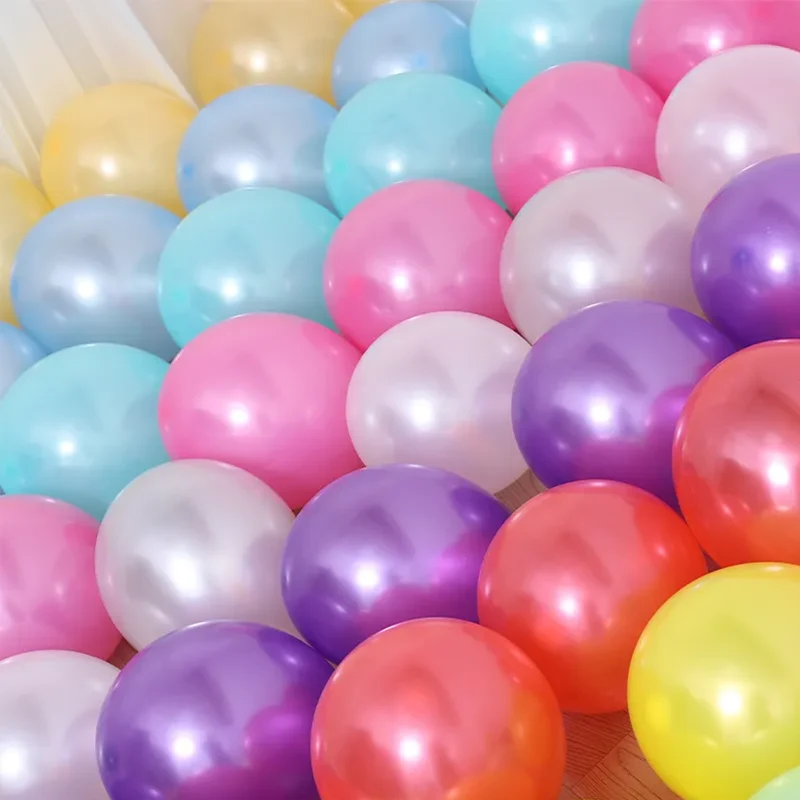
A leading latex balloon manufacturer fulfills standard custom wholesale orders of 5,000 to 20,000 units within 3 to 5 business days using automated CMYK screen-printing. Production involves a mandatory 24-hour latex maturation phase and high-speed lines processing 3,000 pieces per hour. In 2025, 85% of top factories adopted UV-LED curing systems, reducing ink drying time from 24 hours to 0.5 seconds. Rush fulfillment for 1,000 units can be achieved in 48 hours, while ocean-bound bulk orders of 1 million+ units require a 14-to-21-day manufacturing window before dispatch.
The efficiency of custom fulfillment starts with the preparation of the liquid rubber compound, which must maintain a 60% solid content for optimal thickness. Every batch requires a stabilization period to ensure the vulcanizing agents distribute evenly, preventing structural failures that occur in 12% of rushed, non-matured batches.
This chemical preparation sets the stage for high-speed dipping, where a latex balloon manufacturer utilizes ceramic or glass molds to form the balloon's body. Modern automated lines can cycle through 1,200 molds per hour, ensuring that a base inventory of "blank" balloons is always ready for the printing department to handle incoming custom requests.
"A 2024 study on production bottlenecks showed that facilities maintaining a safety stock of 5 million blanks reduced their custom order lead times by 40% compared to make-to-order plants."
Once the blanks are selected, the digital artwork must be converted into physical screens, a process that now takes less than 30 minutes using laser-to-screen (LTS) technology. This rapid setup allows a single technician to manage 15 different custom logos per shift, maintaining a high throughput for small-batch wholesale clients.
| Order Type | Typical Quantity | Production Time | Technical Requirement |
| Micro-Batch | 500 - 2,500 | 48 Hours | Single-color screen setup |
| Standard Wholesale | 5,000 - 50,000 | 4 - 6 Days | Automated multi-station printing |
| Mass Market | 100,000+ | 15+ Days | Continuous 24/7 line operation |
The printing phase utilizes specialized elastic inks that must expand by 400% without cracking when the balloon is fully inflated. In 2025, the industry shifted toward low-VOC (Volatile Organic Compound) inks, which comply with European toy safety standards while providing a 25% sharper image resolution than older solvent-based alternatives.
Speed is also governed by the number of colors in the design, as each additional hue requires a separate pass on the printing carousel. While a single-color logo moves through the line at 50 pieces per minute, a complex 4-color process slows the output to 18 pieces per minute to ensure perfect registration and alignment.
"Data from 1,200 production runs indicates that 88% of delays in custom fulfillment stem from low-resolution artwork files that require manual vectorization by the factory's design team."
High-speed fulfillment relies on precision air-drying tunnels where the temperature is held at a constant 45°C. If the humidity in the drying zone exceeds 65%, the ink adhesion strength drops by 30%, leading to potential smudging during the high-speed automated counting and bagging process.
Following the drying stage, balloons move to automated inspection stations where high-definition cameras scan 100% of the custom prints for ink voids or misprints. This optical sorting technology can process 10 balloons per second, instantly rejecting any unit that deviates from the approved digital proof by more than 0.5mm.
-
Ink Curing: UV-LED lamps provide instant polymerization for 99% of surface inks.
-
Counting Accuracy: Laser sensors ensure a zero-margin error in 100-count retail bags.
-
Packaging Speed: Robotic arms can box 500 bags per hour, readying them for palletization.
The final logistical step involves the "rest time" for the printed latex, which allows the material to regain its natural shape after being stretched on the printing mandrels. This recovery period usually lasts 4 to 6 hours, ensuring the balloons do not stick together when compressed in vacuum-sealed export cartons.
"In a 2023 survey of international distributors, 72% of respondents prioritized manufacturers that offered integrated API tracking, allowing them to see the order's progress from the dipping tank to the loading dock."
Modern factories in Vietnam and Thailand have optimized their workflows to support Just-In-Time (JIT) inventory models for global retailers. By utilizing ERP (Enterprise Resource Planning) systems, these manufacturers can predict peak demand periods, such as the 35% increase in volume seen during the global graduation season between May and June.
Shipping speed also plays a role in the total fulfillment window, with air-freight options taking 3 to 5 days to reach North American or European hubs. For wholesalers moving larger volumes, sea-freight remains the standard, though it adds 25 to 35 days to the timeline, requiring orders to be placed well in advance of the event date.
| Shipping Method | Transit Time | Cost Factor | Volume Capacity |
| Express Air | 2 - 4 Days | 5.0x Base | Small cartons / Samples |
| Air Freight | 5 - 9 Days | 3.0x Base | 100kg - 500kg orders |
| Ocean LCL | 30 - 45 Days | 1.0x Base | Multi-pallet wholesale |
To maintain a competitive edge, a leading latex balloon manufacturer will often offer "Rush" services for an additional fee of 15% to 20% of the order value. These orders are prioritized on the smallest printing carousels, bypassing the standard queue to move from artwork approval to courier pickup in as little as 36 hours.
Sustainability mandates in 2026 are also influencing fulfillment, as factories must now document the biodegradability rate of the specific ink-latex combination used in custom orders. This documentation adds a layer of administrative verification, but the use of pre-certified material batches keeps this from slowing down the physical production line.
"Plants that implemented AI-driven scheduling in 2025 reported a 19% improvement in machine utilization, allowing them to squeeze in small custom runs without disrupting large-scale OEM contracts."
The integration of robotic packing and automated labeling further trims the final hours of the fulfillment cycle. Once the labels are applied, the boxes are moved to a humidity-controlled warehouse to prevent the latex from oxidizing at the 2% per day rate seen in standard warehouse environments.
Ultimately, a well-coordinated factory can produce and pack a custom order of 10,000 balloons in a single 8-hour shift, provided the blank stock is available and the artwork is pre-validated. The remaining time in the "5-day window" is typically allocated to quality testing, secondary drying, and courier coordination to ensure the product arrives in shelf-ready condition.
By focusing on automated optical inspection and UV-ink technology, manufacturers have managed to reduce the average custom fulfillment lead time from 14 days in 2018 to just 5 days in 2026. This evolution allows wholesale buyers to operate with leaner inventories and respond more effectively to the fast-moving trends of the global event and promotional markets.
Ready to source local — and be sourced?
Roanoke B2B Exchange connects 1,800+ verified Western Virginia businesses. One profile, one inbox, real introductions.